
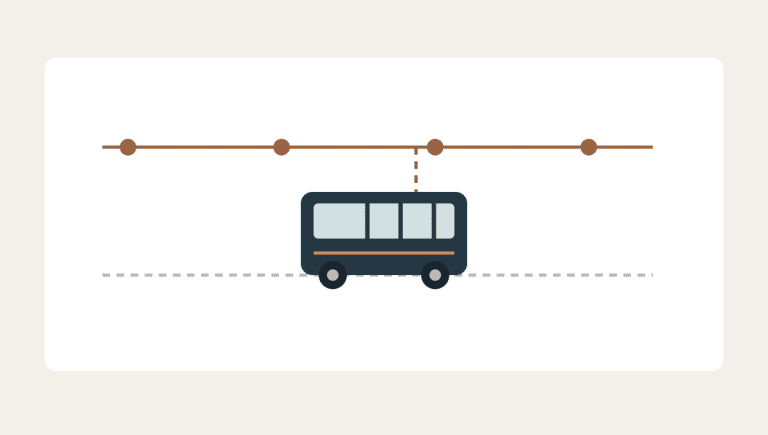
A fixed staff shuttle suits a stable route and shift. A flexible schedule suits known changes in working days or finishing times, provided the operator confirms each change. For mixed demand, keep a fixed core service and quote the exceptions separately. Compare the whole operating week, including return journeys and amendment terms, rather than choosing from the busiest morning alone.
A staff bus can be full on office days and lightly used on others. Moving every departure to suit the latest request makes the timetable harder for everyone to follow. Keeping every run unchanged can leave the company paying for journeys it no longer needs.
The decision is therefore about what should stay predictable and what can change. This comparison focuses on that scheduling choice. For the initial route and pickup-point work, see RL Transport’s employee shuttle planning guide.
Fixed and flexible do not mean the same thing to every operator
A fixed arrangement normally starts with a repeating list of operating days, stops and departure times. Changes are handled as amendments. A flexible arrangement might allow a different roster by day, separately booked additional runs or a timetable reviewed at agreed intervals. These are different services; none automatically means a bus is available whenever someone asks.
Put the proposed operating pattern into writing before comparing quotes. Ask what can change, who can authorise it and when the operator must receive the final instruction. A verbal promise of flexibility is not enough to establish capacity, availability or price.
| Operating pattern | Starting option | What needs confirmation |
|---|---|---|
| Same employees, corridor and shift most days | Fixed timetable | Operating calendar and occasional exceptions |
| Office attendance follows a known weekly roster | Different fixed runs on different days | When each day’s passenger list closes |
| Regular shift plus occasional overtime | Fixed core with separately confirmed extra runs | Notice, vehicle availability and additional cost |
| Widely scattered people with changing finish times | Reassess whether one shared bus works | Whether smaller separate transfers are more practical |
Compare demand by journey, not by total employee headcount
A company headcount does not tell you how many seats are needed on each run. Some employees may attend only on selected days; others may use the morning bus but finish at a different time. Build a demand sheet with a separate line for each direction and shift.
Record the operating date or weekday, worksite, pickup cluster, required arrival time, return departure and expected riders. Mark whether the headcount is confirmed or provisional. For planning, use aggregated pickup areas rather than circulating employees’ full home addresses unnecessarily.
Look for a repeatable core first. If the main shift is stable but overtime is uncertain, changing the whole shuttle contract may solve the wrong problem. The smaller exception is the late return. RL Transport lists late-night transport for staff and other groups; a proposed additional run still needs its own availability and booking confirmation.

Use a fixed core when consistency matters most
A fixed timetable gives employees a stable departure to plan around and gives the organiser one agreed baseline to manage. It is a useful starting point where the same corridor serves the same workplace at similar times.
The limitation appears when the baseline no longer reflects attendance. Review actual boarding against the booked runs rather than treating an empty seat as automatic evidence that the vehicle is too large. A lightly used day may need a different arrangement; a heavily used day may need more capacity. The operator must assess the proposed vehicle and timetable.
Do not remove a stop solely because one day’s boarding was low. Check whether the apparent drop reflects leave, a temporary assignment or a permanent roster change. Confirm the effective date of an amendment before telling passengers the service has changed.
Use flexibility for planned variation, not unlimited last-minute changes
Flexibility works better when the organiser can describe the variation in advance: different attendance days, a published shift roster or a known late finish. The operating brief can then specify which runs repeat and which are booked only after confirmation.
If the departure time remains open until the end of each workday, ask whether the quote includes waiting, how a delayed release is charged and what happens if the assigned vehicle has another commitment. Do not assume an extra hour or a different pickup point can be added without affecting the booking.
A workable change process has one company coordinator and one agreed operator contact. Requests from passengers should go through that coordinator. The final instruction should identify the affected journey, revised timing or stop, headcount and approval of any revised price. Keep the operator’s acceptance with the timetable.
Price the same week under each option
Comparing a fixed monthly figure with an isolated ad-hoc trip price hides differences in scope. Give each proposal the same operating calendar, route, peak headcount and return requirements. Ask for the treatment of public holidays, shutdown periods and days when a run is not required.
The useful comparison is the total quoted cost for the agreed pattern, plus clearly identified exceptions. Check amendment notice, cancellation terms, minimum commitments, waiting and the treatment of extra stops. These terms depend on the actual proposal; there is no universal RL Transport rate or free-change allowance stated here.
Do not divide the monthly figure by the company’s entire workforce to claim a saving. If a per-rider measure is useful, use the passengers actually carried on the relevant runs and state how you calculated it. A lower headline figure is not an improvement if it removes a return journey staff still need.
Trial the timetable and set the decision before reviewing it
Before a trial, agree what would justify keeping, changing or stopping the arrangement. Useful observations include actual boarding, departure and arrival times, missed pickups, unplanned changes and the quoted cost of exceptions. Collect these consistently across the operating pattern, including quieter days.
Separate timing problems from demand problems. A consistently underused run may need a timetable change. A busy run arriving late may instead need its route or boarding process reviewed. Combining both into a single satisfaction score makes the cause harder to identify.

A revised plan should have an effective date, a confirmed run list and a named person responsible for updating staff. Send the accepted version to reception or security teams where site access is involved. Keep the previous version clearly superseded so an old timetable does not remain in circulation.
What should HR send for a scheduling proposal?
Prepare the operating days, proposed start date, route and pickup points, inbound arrival requirements, outbound departures, expected passengers by run and known exceptions. Add any luggage, equipment, access or mobility requirements for the operator to assess. Request separate confirmation of the stable service and the change process.
RL Transport’s shuttle bus service page describes its staff and event transport offering. The specific route, vehicle and changes should be agreed in the booking, rather than inferred from a general service description.
Questions about staff shuttle scheduling
Can a fixed shuttle run on only selected weekdays?
That can be proposed as a repeating operating calendar. Confirm which dates and directions are included and how holidays or exceptional office days are handled.
Does a flexible contract include unlimited route changes?
No such allowance should be assumed. The written proposal needs to say what changes are permitted, the notice required and whether confirmation or additional charges apply.
Should every employee use the same return bus?
Only if their finishing times and destinations make that practical. Review the main return separately from overtime or other exceptions before choosing the scheduling model.