
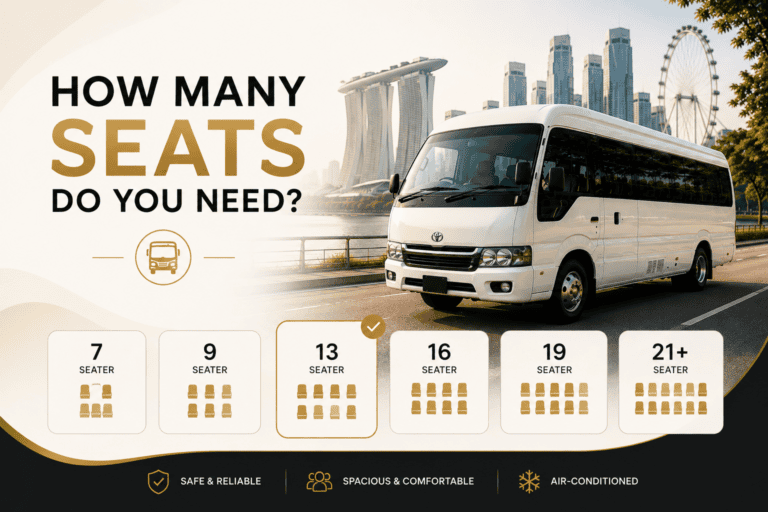
Choosing the right vehicle size is one of the most important decisions you will make when planning group transport in Singapore. If you are wondering how many seats you need, the honest answer is: it depends on your guest count, luggage, event type, and budget; but getting it wrong means paying for empty seats or squeezing people in uncomfortably. This bus & minibus capacity guide walks you through every seating option available in Singapore, explains the real differences between minibuses and full-sized coaches, and gives you a practical framework for matching vehicle size to your event. By the end, you will know exactly which capacity fits your group, what factors to consider beyond headcount, and how to avoid the most common booking mistakes.
Why Getting Bus Capacity Right Actually Matters
Booking a vehicle that is too small means passengers standing, luggage piled on laps, or a second trip. Booking one too large wastes money and often means paying minimum hourly rates for a coach that is mostly empty. The right capacity affects comfort, cost-efficiency, luggage allowance, and even how smoothly your event runs; especially for weddings, corporate functions, and school trips where timing matters.
Common Bus and Minibus Seating Capacities in Singapore
Singapore’s charter fleet is generally built around a handful of standard configurations. Understanding these sizes is the foundation of any capacity decision.
Minibuses (13 to 23 Seats)
Minibuses are the go-to choice for small teams, family outings, and intimate wedding parties. A 13-seater suits a tight-knit group with luggage, while a 23-seater minibus comfortably handles slightly larger gatherings without the bulk of a full coach. Minibuses are also easier to maneuver through smaller streets, hotel driveways, and venue drop-off points.
Mid-Sized Coaches (30 to 40 Seats)
This range works well for medium corporate teams, school classes, and tour groups. A 35-seater, for example, offers a balance between passenger capacity and manageable luggage space, making it a favorite for day trips and conference shuttles.
Full-Sized Coaches (45 to 49 Seats)
For large weddings, company-wide events, conferences, and school excursions, a 45- to 49-seater coach is the standard. These vehicles typically include underbody luggage compartments, making them ideal for airport transfers or multi-day trips where baggage volume is high.
Minibus vs. Bus: What is the Real Difference?
Beyond seat count, minibuses and full-sized buses differ in maneuverability, luggage capacity, and cost structure. Minibuses are generally more fuel-efficient and cheaper per hour, making them cost-effective for smaller groups, but they offer limited under-seat storage. Full-sized coaches trade some agility for significantly more luggage room, onboard amenities, and the ability to comfortably seat larger parties without splitting the group across multiple vehicles.
How Passenger Count Affects Comfort
Seating capacity on paper is not always the same as comfortable capacity. A “40-seater” bus filled to exactly 40 passengers with luggage, coats, and bags can feel cramped on a longer journey. As a rule of thumb, if your trip is longer than 45 minutes or involves formal attire (weddings, corporate events), consider booking a vehicle rated slightly above your headcount to leave breathing room.
Luggage Space: The Factor Most People Forget
Luggage is often the deciding factor between two similarly sized vehicles. Airport transfers, multi-day tours, and golf or sports trips all require significantly more storage than a same-day office shuttle. Always tell your operator your luggage type (backpacks vs. suitcases vs. equipment bags) when requesting a quote, since this can push you into a larger vehicle even if your passenger count stays the same.
Bus and Minibus Capacity Comparison Table
| Vehicle Type | Seating Capacity | Best For | Luggage Space |
|---|---|---|---|
| Minibus | 13 seats | Small family trips, VIP transfers, small wedding parties | Limited |
| Minibus | 23 seats | Corporate team outings, small tour groups, church groups | Moderate |
| Mid-size Coach | 30–35 seats | School classes, mid-size conferences, day tours | Moderate |
| Mid-size Coach | 40 seats | Larger corporate teams, medium weddings | Good |
| Full-size Coach | 45–49 seats | Large weddings, company events, school excursions, airport transfers | Excellent |
Choosing the Right Capacity for Different Events
Weddings: A 13- to 23-seater minibus works for immediate family and bridal party transport, while a 40- to 49-seater coach handles full guest lists between venues.
Corporate events and conferences: Match the vehicle to attendee lists exactly; a 23-seater for a department outing, a 45-seater coach for company-wide events or conference shuttles.
School trips: Larger coaches (40–49 seats) are standard for full classes, factoring in teacher supervision and bag storage.
Airport transfers and tours: Prioritize luggage space over seat count; a slightly smaller passenger capacity with a larger luggage hold often serves multi-day tour groups better.
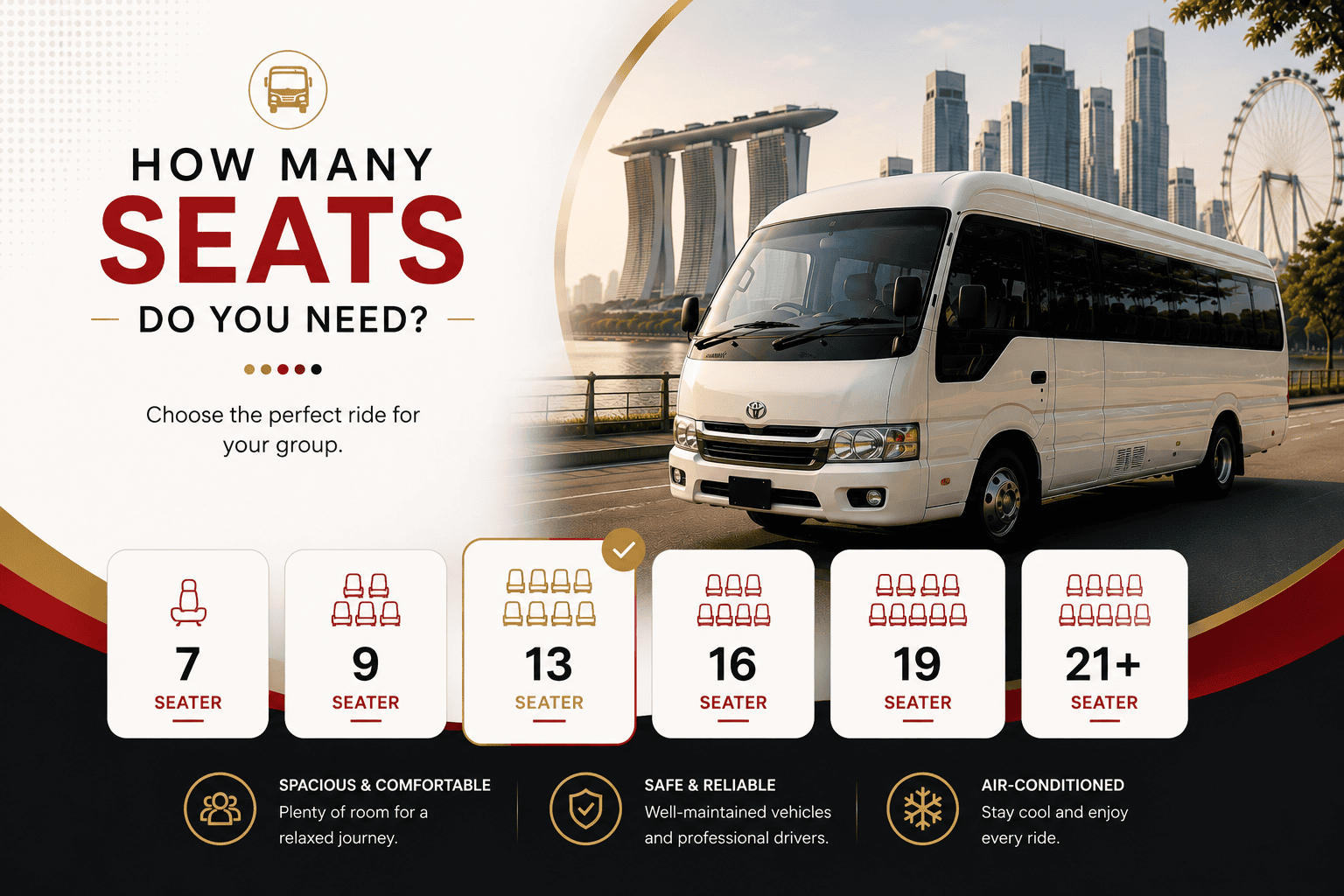
Cost Considerations When Booking
Charter pricing is typically influenced by vehicle size, trip duration, and distance, with minibuses generally cheaper per hour than full coaches. However, splitting a large group across two minibuses can sometimes cost more than a single mid-size coach; always ask for a comparison quote before deciding.
Booking Tips for Getting the Capacity Right
Share your exact headcount, luggage type, event type, and any accessibility needs when requesting a quote. Book slightly early for weddings and peak seasons, and confirm whether the quoted seat count includes the driver’s seat, since this varies by operator.
Common Mistakes to Avoid
Avoid booking based on headcount alone without factoring in luggage; avoid assuming all “40-seaters” have identical legroom, since fleet models differ; and avoid last-minute bookings for peak wedding or graduation season, when larger coaches are booked out first.
Expert Recommendation
As a general guide, book one size class above your exact headcount whenever the trip involves luggage, formal wear, or a journey over 45 minutes. This buffer protects comfort without significantly increasing cost.
Final Thoughts
Choosing the right bus or minibus capacity comes down to matching your headcount, luggage needs, and event type to the correct vehicle class; with a small buffer for comfort. Whether you need a compact 13-seater or a full 49-seater coach, sharing accurate trip details with your transport provider is the fastest way to get the right recommendation and a fair quote.
FAQs: How Many Seats Do You Need?
1. How do I choose the right bus size for my group?
Choose a bus based on your total passenger count, luggage requirements, trip length, and comfort preferences. It is usually best to select a vehicle with enough seats for everyone without exceeding its passenger capacity.
2. What is the typical seating capacity of a minibus?
Minibuses commonly accommodate smaller groups, with capacities often ranging from around 8 to 30 passengers depending on the vehicle type and configuration. Always confirm the exact seating capacity with your rental provider.
3. How many seats do I need for a group of 10 to 15 people?
A 12-, 13-, or 15-passenger minibus can be a practical choice for groups of this size. Consider additional luggage space if you are traveling to an airport or going on a longer trip.
4. Is it better to rent a bus with extra seats?
Yes, having a few additional seats can provide more flexibility and comfort, especially when passengers have luggage. However, you should balance extra capacity against the rental cost and vehicle size.
5. What size bus is best for a group of 20 to 30 people?
A larger minibus or mid-size shuttle bus is generally suitable for groups of 20 to 30 passengers. The ideal option depends on the exact passenger count, luggage needs, route, and available vehicle configurations.